REVIEW · CEBU
Private 5-Hour Cebu City Tour with Lunch
Book on Viator →Operated by Blue Horizons Travel and Tours, Inc · Bookable on Viator
Cebu history packs into just five hours. This private Cebu City tour strings together major landmarks with a mix of Catholic and Chinese heritage, from Magellan’s Cross to the Cebu Taoist Temple. I like that it’s private for up to six, so you’re not squeezed with strangers, and I like that lunch and entrance fees are included so you can actually budget your day.
The one thing to keep in mind is that the quality of a private tour can hinge on pacing. In one reported case, a guide named Edwin stepped back at multiple stops and then pushed a lunch buffet very early, so before you lock it in, make sure you’re comfortable with how your guide plans to run the day and where lunch fits.
In This Review
- Key Highlights You’ll Care About
- Why This Half-Day Private Tour Works in Cebu City
- Pickup, Timing, and Cebu’s Traffic Reality
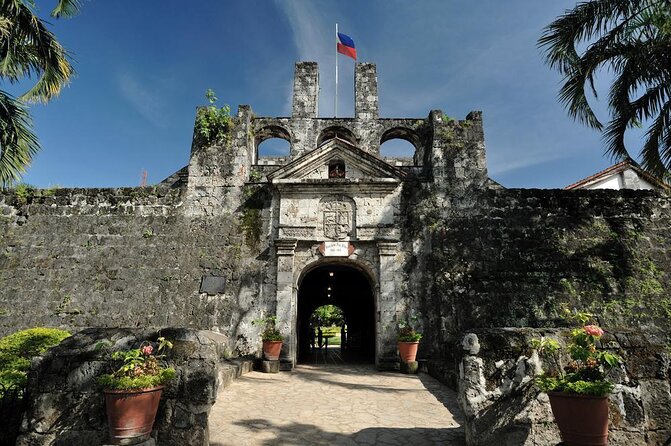
- Fort San Pedro: Spanish Defense and a Quiet Inner Garden
- Basilica del Santo Niño and Magellan’s Cross: The Big Cebu Icons
- Casa Gorordo Museum: A Hardwood House That Shows Everyday Elite Life
- Cebu Taoist Temple and the Carbon Market: A Chinese-Cebu Contrast
- Lunch and Entrance Fees: The Value Equation
- Family-Friendly and Rain-Day Realities
- Who This Private Cebu City Tour Suits Best
- Should You Book This Private Cebu City Tour?
- FAQ
- What sites are included on the Cebu City tour?
- How long is the tour, and what time does it start?
- Do I get hotel pickup and drop-off?
- Is lunch included?
- How big is the group for this private tour?
- What’s the dress code and fitness level needed?
- Can I cancel for a full refund?
Key Highlights You’ll Care About
- Private group size up to six with a guide who can tailor explanations to your pace
- Entrance fees and lunch included, which is a real value boost in Cebu City
- Big names in close proximity: Fort San Pedro, Basilica del Santo Niño, Magellan’s Cross
- A period house, not just a church stop at Casa Gorordo Museum
- Cebu Taoist Temple gate details plus a pass through the Carbon Market for local color
- Smart-casual dress code and moderate walking, so it’s realistic for many families
Why This Half-Day Private Tour Works in Cebu City
Cebu City can feel like two cities at once. You’ve got the religious and colonial landmarks that pull you backward in time, and then you’ve got the market energy and modern streets that keep it moving. This tour balances those sides without trying to cram in everything under the sun.
The private format matters more than it sounds. With a max of six people, you can actually hear your guide, ask questions, and slow down for photos when something catches your eye. It’s also easier for families, since you’re not negotiating group pressure or rigid “stay together” rules.
And then there’s the practical part: lunch and entrance fees are included. In many half-day city tours, those extras pop up at the last minute and suddenly the price feels bigger. Here, you can plan your day around the sites rather than around add-on costs.
You can also read our reviews of more city tours in Cebu
Pickup, Timing, and Cebu’s Traffic Reality
You’ll start with hotel pickup in Cebu City. The stated start time is around 8:30 am, and the tour day typically begins shortly after that, with a morning run that aims to finish with hotel drop-off. The total time is listed at about five hours, but transfers are approximate because Cebu traffic changes with the day.
That’s why I think this tour is best when you’re not trying to stack too much after it. If you’ve got a late lunch reservation or a short shopping run planned, you’ll probably be fine. If you’re racing to catch a ferry or flight, give yourself a cushion.
Also note the small but useful details:
- You’ll get round-trip transport from hotels within Cebu City
- You get a mobile ticket
- Dress code is smart casual
- It’s geared for people with moderate physical fitness (expect some walking between stops)
Fort San Pedro: Spanish Defense and a Quiet Inner Garden
Your first major stop is Fort San Pedro, a Spanish outpost founded in 1565. Even if you’re not a “fort person,” this site is worth it because the fortification has shifted from military purpose to calm public space.
The best part is the inner courtyard garden, which gives you a breather in the middle of a sightseeing morning. You’re not just reading plaques and moving on. You get a little pocket of shade and a slower rhythm before heading toward more crowded religious landmarks.
Plan for about one hour here, including admission. If you like taking photos, you’ll have time, but don’t treat the fort like a single photo spot. Walk around, look for architectural details, and enjoy the contrast between heavy history and a peaceful courtyard.
A small consideration: forts can be a bit exposed in the midday sun. If your trip lands on a hot day, I’d use the shade while you can and keep water handy.
Basilica del Santo Niño and Magellan’s Cross: The Big Cebu Icons
Next you’ll head to Basilica del Santo Niño, a Catholic basilica founded in 1565. It houses a revered 16th-century statuette of the Christ child (Santo Niño). This isn’t just a building visit. It’s tied to devotion that’s been part of Cebu identity for centuries.
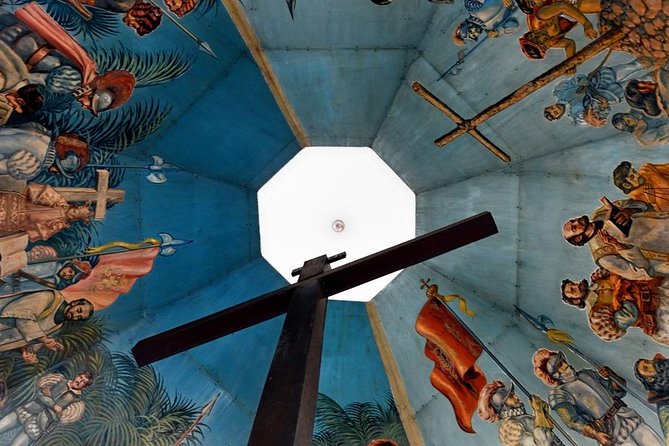
What makes this stop especially strong is its “two-for-one” setup. Across the street you’ll see Magellan’s Cross, installed by Portuguese and Spanish explorers under the orders of Ferdinand Magellan after the 1521 arrival in Cebu. So you get Catholic religious significance and the earliest European-linked symbol in one tight cluster.
You’ll have about one hour for this area. That’s enough time to absorb the meaning without feeling rushed, especially with a guide who can connect the dots between the basilica and the cross.
If you want to make the most of it, arrive with a simple mindset: don’t just look for what’s photographed. Listen for how the guide explains why this location became symbolic. That’s where the tour goes from sightseeing to understanding.
Casa Gorordo Museum: A Hardwood House That Shows Everyday Elite Life
Now you get a different kind of storytelling. At Casa Gorordo Museum, you’re not stepping into a church. You’re touring a home built for Cebu’s wealthy elite.
The house dates to the 1850s and is built using Mactan coral stone and Philippine hardwood, then restored and furnished in period style. The payoff here is perspective. You’re able to picture what “life” meant for upper-class families in the mid 19th century, not just what leaders did or what armies built.
This stop works well for travelers who like material culture—how people lived, how spaces were laid out, and what “comfortable” looked like in another era. If you’re traveling with kids, it can also feel more engaging than a purely religious site because it’s human-scale.
Time here is listed at about one hour with admission included. Use that hour to look slowly. Don’t rush the room transitions. The house is the whole point.
One practical note: museum interiors can mean different lighting than outdoors. If you care about photos, consider timing your camera exposure and be respectful of any rules around filming or flash (those aren’t specified here, so follow on-site guidance).
You can also read our reviews of more private tours in Cebu



Cebu Taoist Temple and the Carbon Market: A Chinese-Cebu Contrast
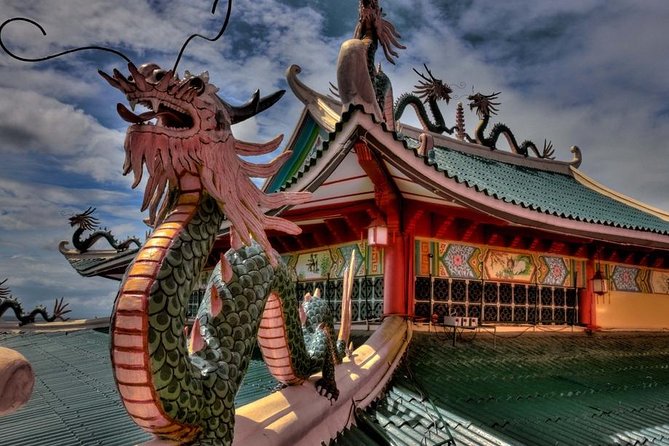
For your final major sightseeing stop, you’ll head to the Cebu Taoist Temple. It sits about 6 km (4 miles) outside the city center, and it was built by Cebu’s Chinese community in 1972.
The standout feature is the temple’s colorful gate, described as echoing the Great Wall of China, complete with dragons and tiered roofs. Even if you’re not deeply into architecture, that gate gives you an immediate visual hook, and it helps you orient your brain before you step inside.
Inside, the tour includes about one hour here, again with admission included. You’ll also pass by the Carbon Market, where many vendors bring fresh produce around the island. It’s not presented as a shopping mission, but it’s a useful “real Cebu” moment: a reminder that Cebu isn’t only landmarks and museums. It’s also food, trade, and daily routines.
This is a good place to go if you want your tour to feel like Cebu is a living city, not a theme park.
If you’re concerned about walking time, remember that this stop adds travel time outside the center. That’s one reason the tour’s “about five hours” estimate matters.
Lunch and Entrance Fees: The Value Equation
At $91.03 per person, the price can look high at first glance—until you break down what’s included. You’re paying for:
- A private guide
- Hotel pickup and drop-off within Cebu City
- Entrance fees for all listed sites
- Lunch
- Local taxes
That combination is the real value. If you tried to replicate this by yourself—hiring a driver, paying admission at multiple sites, and sorting lunch—you’d likely end up spending similar money or more, with less structure and less historical context.
Still, I’ll be honest about what you should watch. One reported experience described lunch as a rushed buffet and questioned the quality relative to the cost. That doesn’t mean every lunch will be the same, but it does mean you should treat lunch as part of the overall pacing conversation. If your priority is a calm, sit-down meal, consider asking ahead how lunch is timed into the schedule.
Also, souvenir photos are not included (you can purchase them). If photos matter to you, ask what’s available and at what cost.
Family-Friendly and Rain-Day Realities
This tour is marketed as family friendly, and the structure supports that. Sites are spaced as distinct “chunks,” each with about an hour allocated, instead of a nonstop sprint across the city.
Walking is moderate, and the tour includes a private vehicle for transit between stops. You’re not relying on public transport with kids or older relatives.
Rain can also happen in Cebu. One example highlighted that even on a rainy day, the guide and driver kept the day memorable. That’s the sort of thing you want in Cebu: flexible logistics and a driver who doesn’t treat weather like a problem that ends the tour.
Practical tip: bring a light rain layer or umbrella. Dress code is smart casual, so you might want shoes that handle wet sidewalks without drama.
Who This Private Cebu City Tour Suits Best
This is a strong fit if you want a guided “greatest hits” of Cebu City without planning a mini itinerary from scratch. I also think it’s ideal when you:
- Want history explained clearly (and not through a foggy map)
- Prefer a small group experience over crowd navigation
- Appreciate that admissions and lunch are handled
- Travel with family and need a day that stays structured
It might be less ideal if you’re the type who wants total spontaneity. Since it’s a set half-day loop, you’re doing the listed stops. If you want to linger for hours in one place or skip parts of the route, you’ll probably feel constrained unless your guide can adapt.
Also, since some parts of the experience depend on guide pacing, it helps to be proactive. If you care most about commentary at each site, say so before you start. A good guide will speed up or slow down to match your expectations.
Should You Book This Private Cebu City Tour?
If you’re looking for a compact way to see Cebu’s core icons—Fort San Pedro, Basilica del Santo Niño, Magellan’s Cross, Casa Gorordo Museum, and the Cebu Taoist Temple—this tour makes sense. The private size, the included lunch plus entrance fees, and the hotel pickup all push it toward good value for a half-day.
My “book it” signal is strongest if you want guided context and an easy day schedule with minimal budgeting surprises. My “think twice” signal is if you’re very picky about lunch timing and want a guaranteed sit-down style meal, because lunch can be where pacing shows (and where quality expectations get tested).
If you do book, go in with one smart move: confirm your priorities with your guide at the start—photos, time at each stop, and how lunch fits. That one conversation can turn a good half-day into a great one.
FAQ
What sites are included on the Cebu City tour?
You’ll visit Fort San Pedro, Basilica del Santo Niño and Magellan’s Cross (near each other), Casa Gorordo Museum, and the Cebu Taoist Temple, plus you’ll pass by the Carbon Market.
How long is the tour, and what time does it start?
The tour runs for about 5 hours and starts with pickup around 8:30 am (pickup timing may be listed around 9 am as well).
Do I get hotel pickup and drop-off?
Yes. Round-trip pickup and drop-off are included for hotels located within Cebu City.
Is lunch included?
Yes. Lunch is included as part of the tour package.
How big is the group for this private tour?
It’s a private experience with a maximum of six travelers.
What’s the dress code and fitness level needed?
The dress code is smart casual. You should have moderate physical fitness, since there will be some walking between stops.
Can I cancel for a full refund?
Yes. You can cancel up to 24 hours before the experience starts for a full refund. If you cancel less than 24 hours before, it isn’t refunded.
If you’d like, tell me your travel dates and hotel area in Cebu City, and I can suggest the best way to schedule this around your other plans (like islands or airport timing).