REVIEW · CEBU
Cebu Traditional Bamboo Cooking
Book on Viator →Operated by Lorelie kalalang ledesma · Bookable on Viator
Bamboo cooking turns dinner into theatre. In Cebu, you’ll learn classic Filipino favorites using charcoal and a bamboo shell, with a beach setting at Hadsan Cove Resort in Lapu-Lapu City. It’s hands-on, simple, and built around an older style of cooking when you didn’t have fancy cookware.
What I like most is the distinct smoky flavor you get from food cooked inside bamboo, not metal. I also love the timing: you can dip in the water while your food cooks.
One thing to consider: this experience needs good weather to run smoothly, and it follows a set session at the resort.
In This Review
- Key highlights before you go
- Bamboo Cooking by the Sea at Hadsan Cove
- The cooking idea: survival style, bamboo shell, and charcoal
- From spices to the bamboo shell: how the session runs
- What you’ll cook: chicken, seafood, hanging rice, salad, dessert
- Hanging rice and dessert: why these sides matter
- Lunch setup: what’s included with your cooking lesson
- Timing and beach time: when you get to swim
- Meet your guide: Lerelei and a hands-on, friendly vibe
- Value check: is $109.99 worth it?
- Who should book this and who might skip
- Before you go: small planning details that matter
- Should you book Cebu Traditional Bamboo Cooking?
- FAQ
- How long is the Cebu Traditional Bamboo Cooking class?
- Where does the experience start and end?
- Is pickup included?
- Is this a private tour?
- What dishes will I cook and eat?
- What’s included in the price?
- Is there a minimum group size?
- Do I need to request bamboo in advance?
- What happens if the weather is bad or the minimum isn’t met?
Key highlights before you go
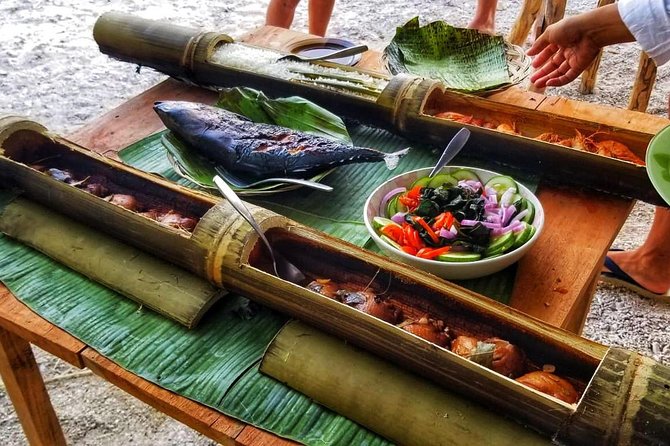
- Charcoal + bamboo shell cooking for a smoky taste you can’t mimic with regular cookware
- 3 Filipino dishes you cook yourself, then eat as a meal
- Beach time during the cooking window while your charcoal finishes the job
- Lunch includes drinks and a full meal setup, not just a snack
- Photos and recipes sent by email after the session, so you can repeat your favorites at home
- Private setup for your group (minimum of 2 people)
Bamboo Cooking by the Sea at Hadsan Cove
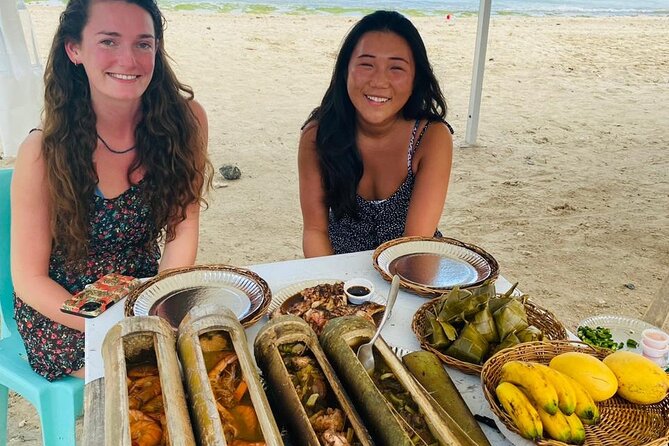
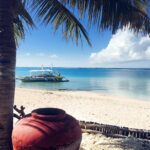
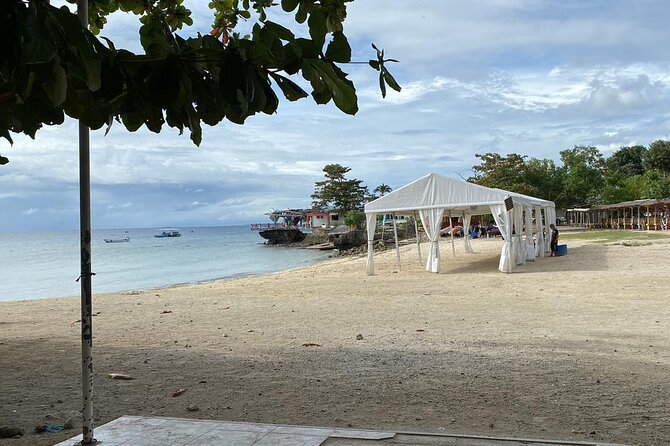
This class happens at Hadsan Cove Resort in Marigondon, Lapu-Lapu City, Cebu—right in front of the beach. That matters more than it sounds. Cooking over charcoal can get smoky and active, and the resort’s beachfront setting keeps it fun instead of stressful.
The session is about 4 hours total, and the experience runs as a private activity, so you’re not mixed into a big crowd. Pickup is offered, and you’ll get a mobile ticket. If you’re planning around transport, the one catch is that private transportation isn’t included—so you’ll want to arrange getting there and back with the pickup option (or your own plans).
You can also read our reviews of more tours and experiences in Cebu.

The cooking idea: survival style, bamboo shell, and charcoal
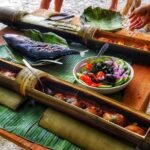
The heart of this experience is a survival cooking method: food cooked using bamboo as the vessel, heated by charcoal. The provider explains that bamboo cooking gives a smoky flavor that you don’t get the same way with metal pots and pans.
Here’s what that means for you in practice. You’re not doing a generic lesson where everything is prepped off-site and you only “assemble.” You’ll work with ingredients, herbs, and spices, then put your food into the bamboo shell to cook over charcoal. It’s active cooking with real timing—watch, adjust, and wait for the heat to do its job.
Before you start cooking, you’ll get a short intro to Filipino cooking history. Even if you’re not a food-history nerd, it helps you understand why the technique matters. Bamboo and charcoal aren’t just props here—they’re part of the flavor method.
From spices to the bamboo shell: how the session runs
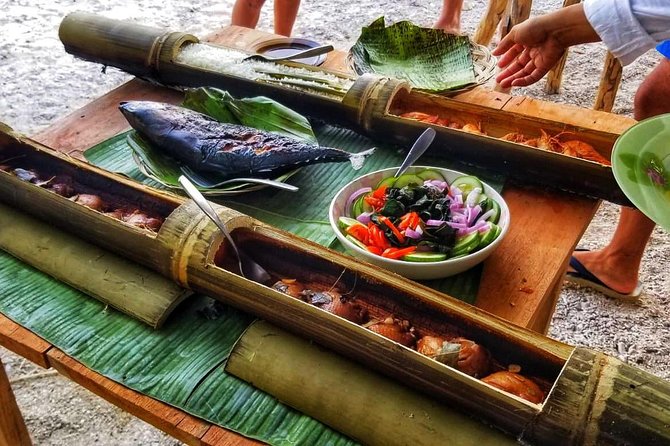
A typical flow goes like this.
First, you’ll settle in at the resort area and get oriented before the cooking starts. Then your group starts prepping spices and herbs for the dishes. This is where you’ll see that Filipino cooking is practical and ingredient-forward: you’re building flavor, not just following steps.
While the main cooking is underway on charcoal, you’ll do two “parallel” things. One is a Filipino dessert preparation using local seasonal fruits. The other is downtime—there’s a beach break built into the timing, and you can refresh with a swim while the food cooks.
Once the bamboo cooking finishes, you’ll move into eating mode. You’ll savor what you made: the dishes you prepared plus the rest of the meal set up for the session.
What you’ll cook: chicken, seafood, hanging rice, salad, dessert
You’ll learn 3 Traditional Filipino dishes using bamboo cooking. The session focuses on dishes featuring chicken, shrimp, and fish. At the same time, the meal includes 3 main courses with chicken, pork, and seafood, so expect a mix across the menu and what you’re cooking versus what you’re eating as part of lunch.
Alongside the bamboo-cooked mains, you’ll also prepare or eat Filipino sides:
- Native Filipino garden salad
- Hanging rice
- Local dessert made from seasonal fruits
That combination is a big part of the value. Many cooking classes teach you one dish and call it a day. This one gives you a fuller plate with contrasting textures: savory bamboo-cooked protein, a fresh salad component, rice cooked in a distinctive way (hanging rice), and a fruit-based dessert.
And the bamboo method makes the mains the star. You’re tasting the difference right away, since the smoky character is part of the final result—not something you only read about later.
Hanging rice and dessert: why these sides matter
I like that the class doesn’t treat sides as filler. Hanging rice is a fun one because it signals technique, not just seasoning. Even without extra details on how it’s made step-by-step here, you can tell it’s different from ordinary steamed rice—both in method and in why local cooks use it.
The dessert is also handled in a smart way. While your bamboo food cooks over charcoal, you’ll work on a dessert using local seasonal fruits. That timing keeps the session from feeling like you’re waiting around. You get another task at the same time, so your 4 hours feel productive.
If you’re the type who worries that cooking classes will be “mostly watching,” this is a good sign. The session includes prep, cooking, and multiple food items rather than a single highlight dish.
Lunch setup: what’s included with your cooking lesson
Lunch is built into the experience, and it’s more substantial than a typical tasting.
The included meal package includes:
- Lunch and beverages: two of the available options (Beer, Soda, or lemongrass tea)
- Three main courses including chicken, pork, and seafood
- Native Filipino salads
- Steamed rice
- Fruit
Even if you don’t want alcohol, those drink options are useful. Lemongrass tea is a practical choice if you’ll still be walking around afterward. Beer and soda are there too, just in case you want the easy vacation mode.
One more practical point: the class includes all the tools and gear you need, including aprons and hairnets. Ingredients are provided, and you’ll also use a bamboo shell for cooking as part of the method. That means you’re not showing up with equipment or hunting down supplies.
Timing and beach time: when you get to swim
You’re cooking with charcoal, which takes time to heat through and cook evenly. The resort uses that waiting period well.
While the food is cooking, you can take a refreshing dip on the beach. In a good session, this is the sweet spot: you don’t feel stuck watching the same pot for hours. You’re active in the prep phase, then you get a break while the bamboo and charcoal finish the work.
Just remember this is weather-dependent. If conditions aren’t good, the session may be adjusted or offered a different date, so don’t plan your flight timing as if this is guaranteed.
Meet your guide: Lerelei and a hands-on, friendly vibe
Your experience is provided by Lorelie kalalang ledesma, and the guide is referred to as Lerelei. In the style of good local cooking teachers, she’s there to guide you through the steps while keeping the session fun and manageable.
From the vibe described in the experience info, the class leans into participation. You’re not just standing there for photos. You’re making spices and herbs ready, cooking your portion in the bamboo shell, and tasting what you helped create.
That friendly, hands-on approach is a big part of why a class like this lands well for first-timers. If you’ve never cooked Filipino food before, you still get a meaningful experience without needing special skill.
Value check: is $109.99 worth it?
At $109.99 per person for about 4 hours, the question is what you’re paying for beyond “a cooking lesson.”
Here’s the value case:
- You’re getting a real technique: bamboo shell cooking over charcoal, not just plating or flavoring pre-cooked food.
- You learn multiple dishes plus sides, so you leave with more than one recipe to try.
- Lunch is included, with beverages (Beer, Soda, or lemongrass tea) plus main courses, salads, rice, and fruit.
- You don’t have to bring anything: tools, aprons, hairnets, ingredients, and the bamboo shell are handled.
- Afterward, you receive an email with photos and recipes, so the value extends past the day itself.
Also, it’s private for your group. Private doesn’t always mean better, but here it matters because cooking is hands-on and timing-based. You don’t want a crowd slowing down the process or making the smoke-and-charcoal moment feel chaotic.
What’s not included is private transportation, so budget for getting to the meeting point or using the pickup option if it’s available for your route.
Who should book this and who might skip
This fits best if you like:
- Hands-on cooking
- Food experiences tied to local technique
- Beach time with a purpose (not just sunbathing)
- Eating what you cook, with a full meal setup
You might want to skip or rethink if:
- You dislike outdoor cooking and charcoal smell
- Your schedule is tight and you can’t handle weather-based date changes
- You’re expecting a quiet museum-like lesson (this is active cooking at the resort)
If you’re traveling as a couple or small group, the minimum of 2 people is usually easy to meet. Solo travelers may find it harder unless you can join a pair; the experience requirement is a practical factor.
Before you go: small planning details that matter
There’s one key planning rule: you require 3 days notice before the cooking class to ensure bamboo can be ordered. That’s not a random admin detail. Bamboo is part of the cooking method, so the operator needs time to get the materials.
You’ll also want to think about when to do this in your Cebu trip. If you plan to swim, you’ll want decent weather and comfortable swim conditions. If you’re also scheduling other tours the same day, leave a bit of buffer since the class runs about 4 hours.
Should you book Cebu Traditional Bamboo Cooking?
If you want a cooking class that feels more like a living local practice than a staged demo, I’d book this. The combination of bamboo + charcoal cooking, a full meal with multiple dishes, and the chance to swim while it cooks makes the experience feel efficient and genuinely fun.
I’d hesitate only if your schedule is inflexible or you’re traveling at a time when weather uncertainty could disrupt plans. Otherwise, $109.99 can be solid value when you factor in lunch, tools, ingredients, bamboo cooking, and the follow-up email of photos and recipes.
FAQ
How long is the Cebu Traditional Bamboo Cooking class?
It runs about 4 hours.
Where does the experience start and end?
It starts at Agus, Gamay, The Beach Park-Hadsan, Lapu-Lapu City, 6015 Cebu, Philippines, and it ends back at the same meeting point.
Is pickup included?
Pickup is offered, but private transportation is not included.
Is this a private tour?
Yes. It’s private, and only your group participates.
What dishes will I cook and eat?
You’ll learn 3 traditional Filipino dishes featuring chicken, shrimp, and fish, plus native Filipino garden salad, hanging rice, and a local dessert made with seasonal fruits. Lunch also includes three main courses (chicken, pork, and seafood), along with salad, steamed rice, and fruit.
What’s included in the price?
Included items cover lunch (with two beverage choices such as Beer, Soda, or lemongrass tea), main courses, native Filipino salads, steamed rice, fruit, plus all cooking tools, aprons, hairnets, ingredients, and the bamboo shell for cooking.
Is there a minimum group size?
Yes. The activity requires a minimum of 2 people.
Do I need to request bamboo in advance?
You require 3 days notice to ensure the necessary bamboo can be ordered.
What happens if the weather is bad or the minimum isn’t met?
The experience requires good weather. If it’s canceled due to poor weather, you’ll be offered a different date or a full refund. If it’s canceled because the minimum isn’t met, you’ll be offered a different date or experience or a full refund. The booking is non-refundable and can’t be changed for any reason.