REVIEW · CEBU
The Original Cebu City Historical and Food Walking Tour
Book on Viator →Operated by Lorelie kalalang ledesma · Bookable on Viator
Cebu tastes better when you walk it. This Original Cebu City Historical and Food Walking Tour swaps the usual beach-first plan for an evening of history and street food, with a guide leading you between major landmarks and local-eating spots most visitors never find on their own. It’s also a nice way to get your bearings fast in Cebu City, especially if your schedule is tight and you’d rather not plot routes step-by-step.
I really like that the experience is guide-led, so you’re not stuck figuring out turns or timing while you’re hungry. I also like that the tour includes admission tickets for key stops like the Santo Niño Basilica and other heritage sites, which keeps the value feeling more solid than a pure sightseeing walk.
One consideration: the $69.99 price can feel steep to some people if you’re expecting a longer, heavier “food-only” mission. Also, the overall time can vary a bit depending on your pace and timing, and being late can mean missing an included part of the visit.
In This Review
- Key highlights to look for
- How this 4 pm Cebu walk changes your whole trip
- Meeting at Ayala Terraces and ending at Freedom Park Carbon
- Heritage of Cebu Monument: more than a photo stop
- Yap-Sandiego Ancestral House: coral stone and Spanish-Chinese details
- Santo Niño Basilica and Magellan’s Cross: where Cebu layers Christianity
- Cebu Carbon Market: the street-food heart of this tour
- Cebu Metropolitan Cathedral: WWII marks on a living building
- The food stops: how to make them work for you
- What makes the guides a big deal on this tour
- Price and value: is $69.99 fair?
- Timing, pacing, and how to plan your evening
- Who should book this Cebu City history and food tour
- Should you book this tour?
- FAQ
- How long is the Cebu City Historical and Food Walking Tour?
- Where do you meet and where does the tour end?
- What does the price include?
- Is the group size small?
- What if the weather is bad?
- Can I get a refund if I cancel?
Key highlights to look for
- Guide-led route so you can focus on sights and snacks instead of directions
- Included entrance tickets at multiple heritage stops
- Historic Cebu landmarks from Magellan’s Cross to the Metropolitan Cathedral area
- Street food at local markets with a Cebu-first approach
- Small group size (max 20) for easier questions and pacing
- Evening timing starting at 4:00 pm for a smoother city walk after the heat
How this 4 pm Cebu walk changes your whole trip
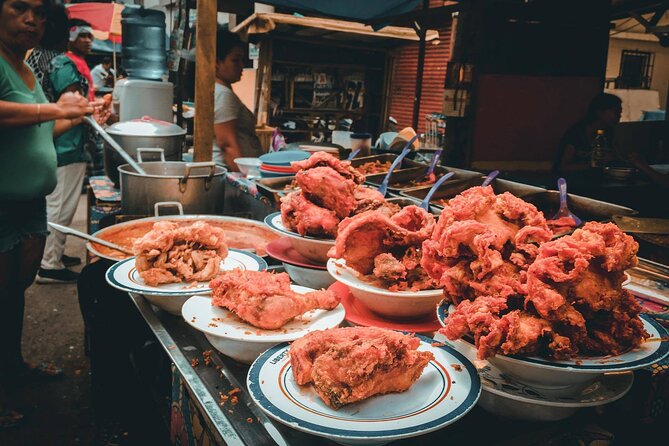
If you’re landing in Cebu with plans for beaches, it’s easy to treat Cebu City like a quick pit stop. This tour flips that idea. You spend your afternoon-to-evening on the city’s cultural spine—churches, monuments, ancestral architecture—then you add the part that locals actually care about: what they eat and where.
You’ll also get something less tangible but useful: conversation. The best moments on this kind of tour come from your guide answering the small questions you don’t think to ask on your own. People in the local scene are usually happy to explain things when you show curiosity, and a walking format makes that easy.
And since it’s a group max of 20, it stays social without turning into a stampede. Even better if you’re traveling solo and want a built-in way to meet people while still feeling like you’re with a “real plan.”
You can also read our reviews of more tours and experiences in Cebu.

Meeting at Ayala Terraces and ending at Freedom Park Carbon
The tour meets at Ayala Terraces (Biliran Rd, Cebu City) at 4:00 pm. You’ll see the day’s plan unfold right away: first you gather, then your guide starts you moving as a group. The tour also ends at Freedom Park Carbon, so you can naturally drift toward dinner without having to backtrack across the city.
A practical point: wear decent walking shoes. You’re on your feet for a few hours, and street surfaces can be uneven. Also, plan to travel light. If you’re carrying a big bag, it can turn the stroll annoying fast.
One more practical note from the experience style: the tour is set up around food stops and entrances. It’s not described as a “ride to your hotel” kind of thing, so you’ll want to make sure you already know how you’re getting back after you finish at Freedom Park Carbon.
Heritage of Cebu Monument: more than a photo stop
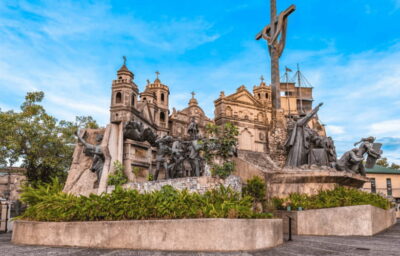
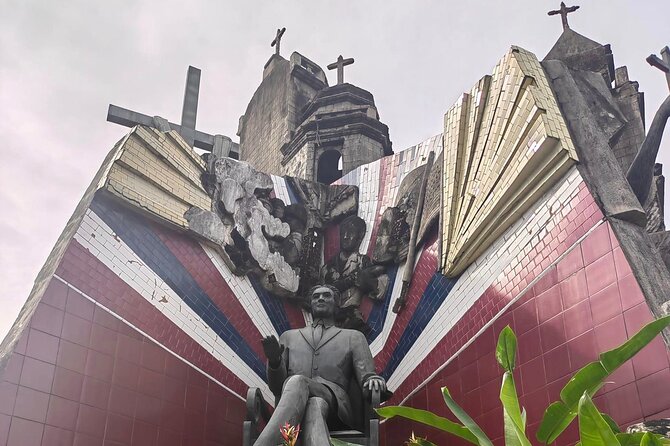
Your walk begins at the Heritage of Cebu Monument. The monument is a tableau-style artwork connected to key moments in Cebu’s involvement in Philippine history. It specifically points to events like the Battle of Mactan, the inauguration of Sergio Osmeña as President, and other historical episodes represented in the artwork.
What makes this stop worthwhile is the way it sets context. Without that frame, Cebu City landmarks can feel like random historic objects you check off. With a guide’s pacing, the monument becomes the “why” behind the rest of the places you’ll see later—especially the religious and colonial layers.
You’ll also have an included admission ticket here, and that matters. People who show up late can miss portions of the included experience at this early stage, so if you want the full value, treat the start time as real, not optional.
Yap-Sandiego Ancestral House: coral stone and Spanish-Chinese details
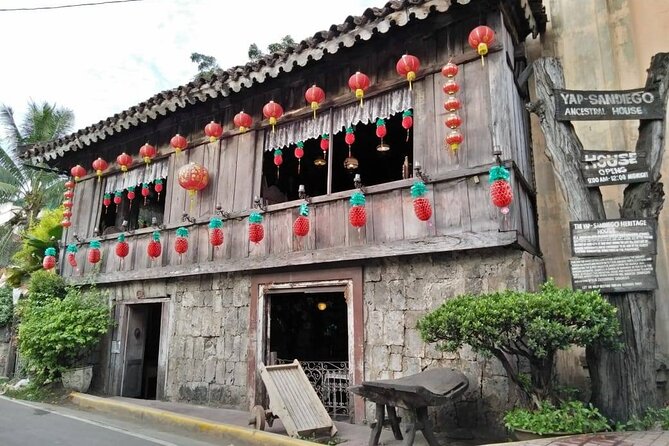
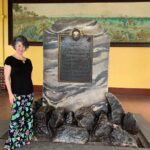
Next up is Yap Sandiego Ancestral House, an atmospheric old home built around 1680, using a mix of wood and coral stone. It’s known for blending Spanish and Chinese architectural influences—a physical reminder that Cebu’s trading history shaped everyday life, not just politics.
This is the kind of stop where you slow down a bit. The house isn’t just about looks. It’s also about how a home functioned in its era—layout, materials, and how families lived around the realities of the time.
You’ll get an included ticket here too, so you’re not paying extra to get inside. It’s a strong contrast to the next religious sites, because the style is domestic and personal rather than monumental and public.
Santo Niño Basilica and Magellan’s Cross: where Cebu layers Christianity
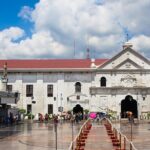
One of the biggest sights on the route is the Basilica Minore del Sto. Nino de Cebu, often called the Santo Niño Basilica. It was founded in 1565 by Fray Andrés d… (the name is shortened in the description you’re given), and it’s one of Cebu’s anchors for Catholic faith history.
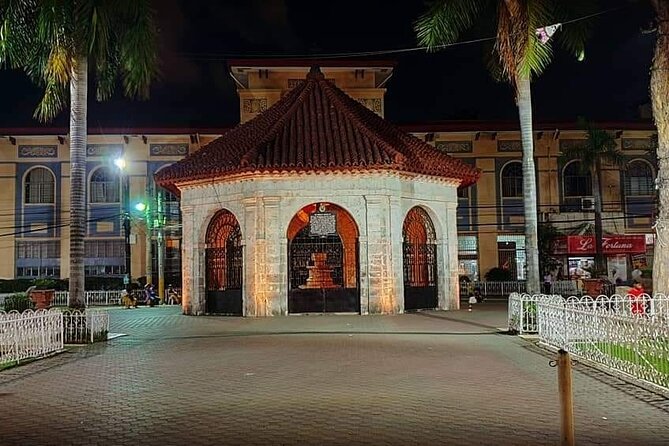
Right near it is Magellan’s Cross Pavilion, a stone kiosk on Plaza Sugbo, designed to house the Christian cross planted by explorers of the time described in the site history. Even if you’re not into religious tourism, you’ll still find this area important because it’s where history, faith, and Spanish-era symbolism meet in public space.
You’ll notice a pattern across both stops: they’re not only about what you see, but about how the city remembers. A good guide will connect the dots between why these symbols mattered when they were introduced, and how they became part of Cebu City identity.
Both stops come with included admission tickets, so again—arrive on time and you keep the value where it should be.
You can also read our reviews of more food & drink experiences in Cebu
Cebu Carbon Market: the street-food heart of this tour
After the major landmarks, the tour shifts into food mode with Cebu Carbon Market. The name connects to a Spanish word: carbón, meaning coal. The area was said to be close to a coal depot used for trains of the old Cebu Railway.
That background helps you see the market as something more than a snack pit. It’s a place with roots in the city’s movement of goods—and markets tend to be where everyday culture survives longest.
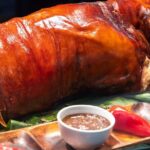
This is also where “historical walking tour” turns into actual eating. The tour is positioned as a mix of landmarks plus street-food hot spots, with 3 food stops as part of the experience design. Depending on the night and what’s available, you might encounter famous Cebu street-food favorites mentioned in past experiences, including lechon, balut, and tuslob buwa.
Two tips if you’re planning your appetite:
- Go hungry enough to enjoy the food, not just sample it.
- If you’re picky or have strong dietary restrictions, you’ll want to think carefully. Street food can include egg-based items (like balut) and foods that aren’t vegan/vegetarian by default.
If you’re the kind of eater who likes learning by trying, this is one of the best parts of Cebu City for that reason alone.
Cebu Metropolitan Cathedral: WWII marks on a living building
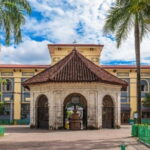
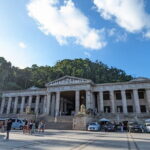
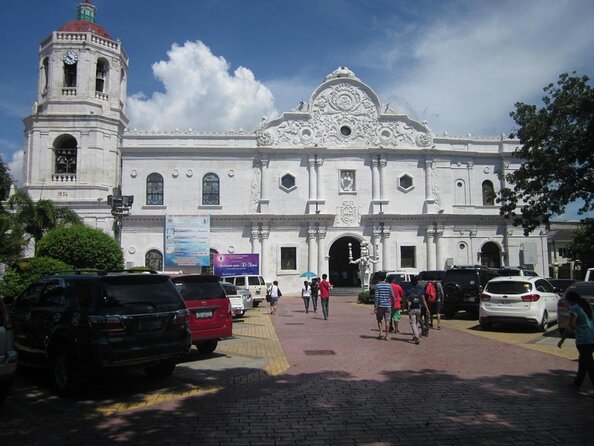
Your final major sightseeing stretch brings you to the Cebu Metropolitan Cathedral (also identified in the description as the Metropolitan Cathedral and Parish of Saint Vitalis and of the Immaculate Conception).
The cathedral’s story includes major damage during World War II, when much of it was destroyed by Allied bombing, and then later rebuilding. That detail matters because it makes the building feel current, not frozen in the past. You’re looking at a place that has been hit, repaired, and still functions in daily life.
This stop can be especially powerful after the market and churches earlier in the route. It’s the “aftermath” version of history—how communities rebuild and carry on.
There’s an included ticket here too, so make sure you don’t accidentally rush this one. If you’re tired, take a minute, breathe, and let your guide point out what to notice.
The food stops: how to make them work for you
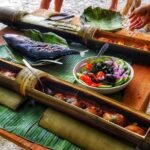
This tour’s food style is very Cebu-local. It’s not described as a polished restaurant crawl with forks and fancy plating. Instead, you get street-food choices and market-style eating that help you taste how people actually eat day to day.
Based on the kinds of items brought up in past experiences, expect the food list to lean “adventurous.” You may see:
- Balut (if it’s on the menu that evening)
- Tuslob buwa (a local street snack described in past experiences)
- Lechon (a Cebu classic people often look for)
That’s the good news: if you want the iconic foods, this tour is set up to help you try them with guidance. The slightly tougher news: if you’re not comfortable with unusual textures or egg-based snacks, the tour can still be great for the sights, but the eating portion might not match your comfort level.
If you want this to go smoothly, do one simple thing: tell your guide what you won’t eat before you get deep into the food stops. That way you avoid the awkward moment of feeling pressured when you’re already hungry.
What makes the guides a big deal on this tour
A walking tour lives or dies on the guide. In past experiences tied to this tour, the guides show up as friendly hosts with strong stories and good pacing—people like Kyle, Phillip, Necian, and hosts associated with Lorelie kalalang ledesma.
One standout pattern: guides tend to encourage questions while staying conversational. You’re not just listening to a monologue. Even better, the tour often uses local movement—like hopping on jeepneys or other public transport early on—so you’re not stuck only walking in a straight line.
That matters for value. When someone else handles routing and pacing, you get a smoother “I’m in Cebu City” feeling faster. You can pay attention to the sights and the food instead of staring at a map and calculating distances.
Price and value: is $69.99 fair?
At $69.99 per person for about 4 hours, this tour isn’t the cheapest way to spend an afternoon. But it does include meaningful value pieces:
- Admission tickets included at multiple heritage stops
- 3 food stops
- A guide-led route that reduces your planning work
- A small group size (max 20), which helps with pace and attention
So how do you decide if it’s “worth it” for you?
- If you want both major Cebu landmarks and street-food tasting in one shot, the combination is efficient.
- If you’re only chasing food and can easily find street food on your own, you might feel the cost is higher than you expected.
- If you expect long time at each site no matter what, keep in mind that the tour length can feel shorter when the group moves fast.
One more practical value note: if you arrive late, you can miss parts of what’s included at the beginning. Since admissions are built into the experience, arriving early helps you protect your money.
Timing, pacing, and how to plan your evening
The tour starts at 4:00 pm, and it’s described as about 4 hours. In real life, walking pace and group flow can adjust that timing. Some people may finish sooner if the group keeps moving well, while other nights feel slower depending on crowds and where you pause for questions.
Since it ends at Freedom Park Carbon, I’d plan a simple evening: think of dinner options nearby, or keep your next activity flexible. If you have a hard reservation right after the tour, give yourself a buffer.
Also, this is a tour that works best when you show up ready to walk and eat. If you’re running late, have snacks on hand as a backup so you’re not miserable waiting for the next stop.
Who should book this Cebu City history and food tour
Book it if:
- You’re visiting Cebu City for the first time and want a guided path through the big heritage sites.
- You love street food and want help trying foods you might hesitate to order alone.
- You like history, but you also want your history to connect to daily life, not just statues.
Consider skipping or choosing something else if:
- You’re strongly food-restricted (even if you’re curious, street-food choices may not fit your needs).
- You want a long sit-down meal experience instead of market-style tasting.
- You hate paying for guided structure and prefer self-guided exploring.
This tour also tends to work well for solo travelers because you’re not wandering alone and you have a built-in social rhythm, while still getting a guided route.
Should you book this tour?
If you want a Cebu City evening that mixes iconic landmarks with real local eating, this is a strong pick. The guides’ conversational energy, the included admissions, and the street-food focus make it more than a basic history walk.
I’d book it when:
- you can arrive on time,
- you’re comfortable trying at least a few local items,
- and you’d rather spend your limited time in Cebu City with a plan than figuring everything out yourself.
If that sounds like you, you’ll likely leave with two things people usually remember most: a clearer sense of Cebu City history and a better idea of what locals actually snack on.
FAQ
How long is the Cebu City Historical and Food Walking Tour?
It runs for about 4 hours.
Where do you meet and where does the tour end?
The tour starts at Ayala Terraces and ends at Freedom Park Carbon.
What does the price include?
The tour price includes a guide experience, street-food stops, and admission tickets for the main listed sights.
Is the group size small?
Yes. The tour has a maximum of 20 travelers.
What if the weather is bad?
This experience requires good weather. If it’s canceled due to poor weather, you’ll be offered a different date or a full refund.
Can I get a refund if I cancel?
No. It’s non-refundable and can’t be changed for any reason.