REVIEW · CEBU
Half-Day Cebu City Tour
Book on Viator →Operated by TRAVELITE TRAVEL AND TOURS · Bookable on Viator
Four hours, and Cebu clicks into place. This half-day Cebu City tour is built for first-time orientation, hitting the big names without the stress of figuring out routes on your own. I especially like how it pairs Spanish-era sites with Cebu’s Chinese and religious landmarks, so you get a fuller feel for the city than you would from one museum or one church. Hotel pickup and drop-off also mean you can spend your energy on photos and walking, not haggling over transport.
Two things I really like: you get hotel pickup and drop-off plus an air-conditioned vehicle, which is a lifesaver in Cebu’s heat. And the stops include guided context, so Magellan’s Cross and Fort San Pedro land with meaning, not just as photo backdrops. On top of that, admission tickets are included for the key sites on the route.
One drawback to plan for: much of the tour is spent in the city with limited shade, so heat management matters. You’ll also be near busy areas where you might notice lots of people approaching for money, so keep your answers and cash handling simple and discreet—then keep moving.
In This Review
- Key highlights you’ll actually feel in the moment
- What this half-day tour gets you: orientation plus stories
- Hotel pickup, air-conditioned comfort, and the value of not routing yourself
- Magellan’s Cross: the starting point that explains a lot
- Fort San Pedro: Spanish defense, sea-side power, and a strong next step
- Santo Niño Basilica: where the religious landmark becomes the cultural anchor
- Taoist Temple in Beverly Hills: the Chinese community’s imprint
- Yap Sandiego Ancestral House: 17th-century life you can walk through
- The steel-and-bronze Cebu history monument: a quick but meaningful finale
- Comfort, crowds, and heat: make the most of four hours
- Price and value: why $75 can make sense here
- Who should book this tour (and who should skip it)
- Should you book the Half-Day Cebu City Tour?
- FAQ
- How long is the half-day Cebu City tour?
- What time does the tour start?
- How much does it cost?
- Is pickup and drop-off included?
- What’s included in the tour price?
- Are tickets or entry fees included for the stops?
- What isn’t included?
- Is this a private tour?
- What’s the group size limit?
- What cancellation options do I have?
- Is it okay for most travelers to join?
Key highlights you’ll actually feel in the moment
- A fast “greatest hits” route through Cebu’s most recognizable landmarks in about 4 hours
- Guides who help with more than facts, including photo-friendly assistance (people often call out guides like Annabel, Liz, Peter, and Jonathan)
- Admission tickets included at each main stop, so you’re not scrambling for entry fees
- Religious and cultural mix, from Magellan’s Cross and Santo Niño Basilica to the Taoist Temple
- Group size capped at 8, so you’re not trapped in a huge crowd shuffle
- Short time at each site, which is ideal if you want variety over slow wandering
What this half-day tour gets you: orientation plus stories
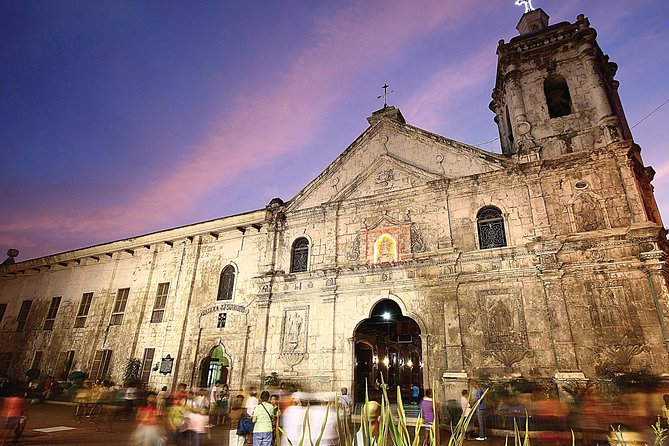
Cebu City can feel like a maze at first. This tour is designed to give you a mental map fast. You’re not doing “everything,” but you are seeing the core landmarks that shape how locals and visitors understand the city’s past.
The best part is the pairing. You’ll start with Magellan’s Cross, then move into Spanish military history at Fort San Pedro, then shift again to religious heritage at Santo Niño Basilica. After that, you’ll see the Taoist Temple in the Beverly Hills subdivision area, followed by a look at a 17th-century ancestral house and a final stop that uses sculptures to show scenes from Cebu’s history. It’s a lot for four hours, but the route is logical: power, faith, community, and memory.
Also, the tour isn’t just “drive and stop.” You’ll have a guide along the way, and the guides are widely praised for being warm, engaging, and good at explaining what you’re looking at. If you learn best by hearing context out loud, this format fits you well.
You can also read our reviews of more city tours in Cebu

Hotel pickup, air-conditioned comfort, and the value of not routing yourself
Cebu traffic and parking can eat time fast. Here, the biggest practical win is round-trip hotel pickup and drop-off. You show up, get in, and the day moves.
Transportation is also air-conditioned, and the tour includes private transportation (meaning you won’t be stuck sharing a ride with strangers outside your group). With a maximum group size of 8, you get a bit more flexibility for quick photo stops without a chaotic stampede.
That matters because a half-day tour is basically a time-budget exercise. If you waste 45 minutes figuring out where to go next, the “short tour” stops being short. This one is structured to keep the clock moving, while still giving you time to actually enter key sites and walk around.
Magellan’s Cross: the starting point that explains a lot
Magellan’s Cross is where Cebu’s story gets pinned to a specific moment. The cross is tied to Portuguese and Spanish explorers and ordered by Ferdinand Magellan after arriving in Cebu in March 1521. It’s a compact stop (about 20 minutes), but it sets the tone for what comes next.
What I like here is that you’re not just looking at a relic. You’re seeing a marker that people connect to the arrival of European influence in the region. If you’re the type who likes your photos to mean something, this stop delivers.
Practical tip: treat it like a quick orientation moment. You’ll spend less time photographing every angle and more time learning what the cross represents, then you’ll be ready for Fort San Pedro without feeling lost.
Fort San Pedro: Spanish defense, sea-side power, and a strong next step
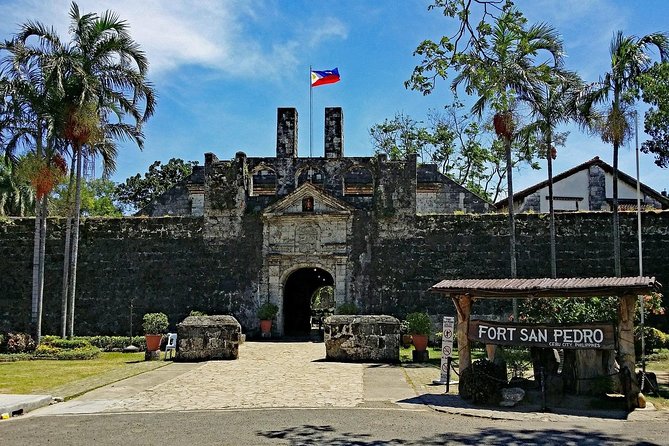
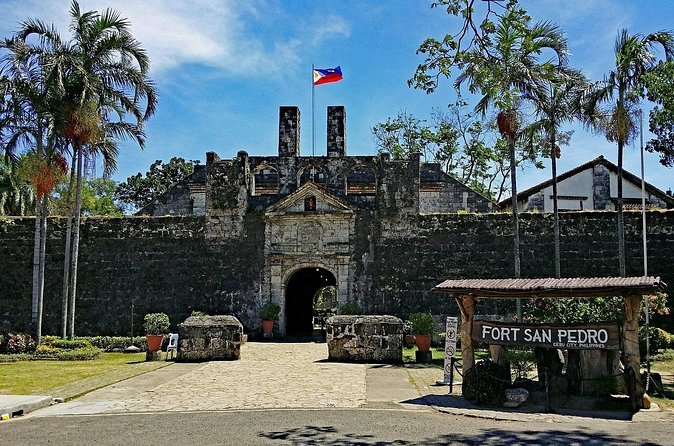
From Magellan’s Cross, the tour shifts to military history at Fort San Pedro. It’s described as a Spanish defense structure built under Miguel López de Legazpi, first governor of the Captaincy General of the Philippines.
This stop is also timed at about 20 minutes. That’s enough to see the structure and get the historical context, especially when your guide connects it to the bigger idea: Cebu as a strategic location, not just a stopover.
One note on expectations: because the time window is short, it’s best if you’re okay with “see and understand” rather than “wander and read every panel.” If you want long, slow exploration, you’d need to pair this tour with your own extra time elsewhere after.
Santo Niño Basilica: where the religious landmark becomes the cultural anchor
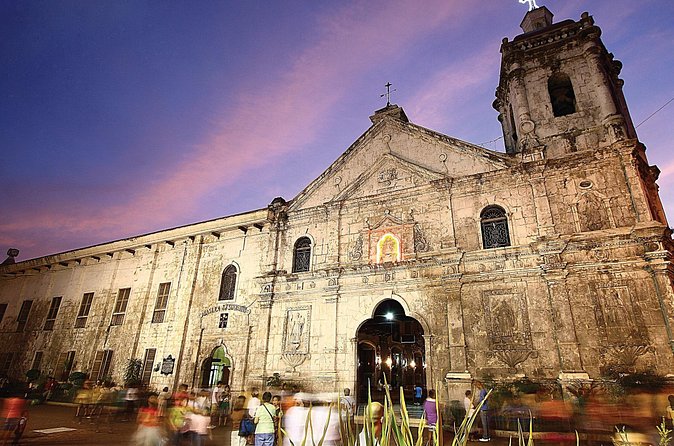
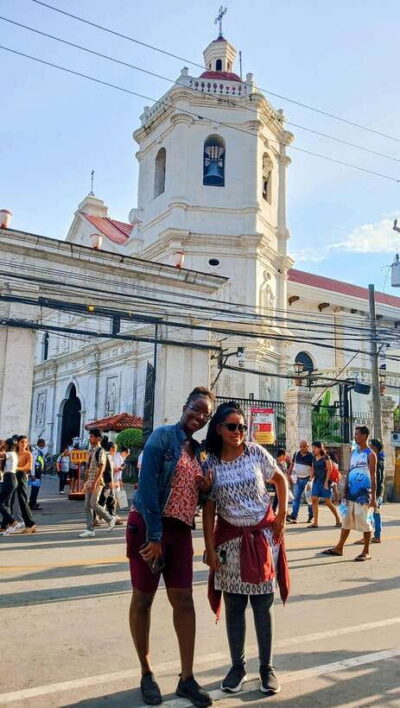
Next up is Basilica del Santo Nino, founded in 1565 and closely tied to Cebu’s ongoing religious identity. The stop is about 20 minutes, which makes it a solid fit for a half-day route.
Here’s why it matters even if you’re not religious. Major religious sites tend to be the emotional center of the community. They shape daily life, celebrations, and even how people talk about their past. With a guide, you’re not just snapping a picture of a church façade—you’re learning why this basilica stays central.
If you prefer quiet sightseeing, it can be busy here, since it’s a key destination. Go with the mindset of getting the overview fast and then moving on.


Taoist Temple in Beverly Hills: the Chinese community’s imprint
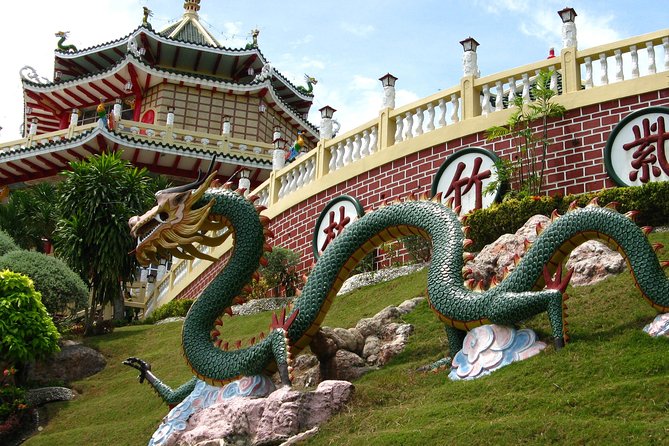
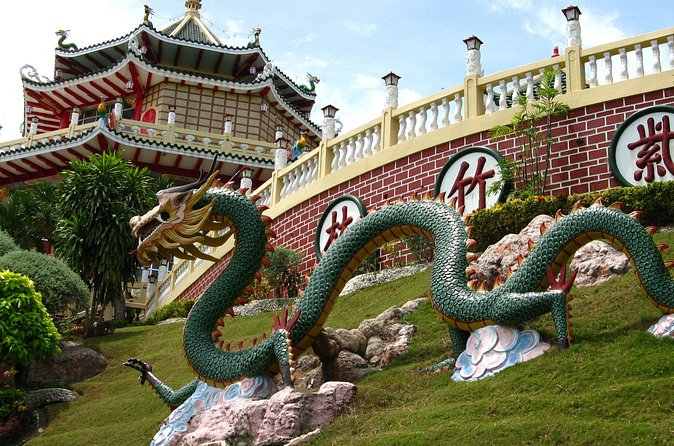
After the Spanish-era religious stops, the route changes gears to the Taoist Temple in the Beverly Hills subdivision area. The temple was built in 1972 by Cebu’s substantial Chinese community. This stop runs about 30 minutes, longer than most others on the route, which helps because you’ll likely want more time to take in details.
This is one of those “Cebu is not just one story” moments. It adds a different cultural lens right after you’ve seen Catholic and Spanish influences. If your goal is to understand why Cebu looks and feels the way it does, this stop helps connect the dots.
Heat and walking still apply here. Wear something you can move in, bring sunscreen, and plan your photos so you’re not standing still longer than needed.
Yap Sandiego Ancestral House: 17th-century life you can walk through
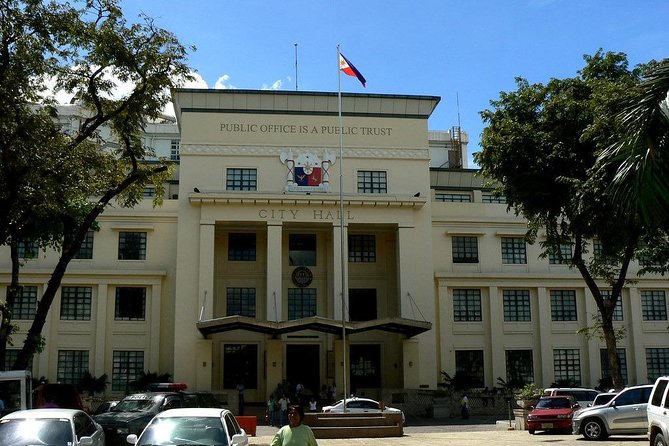
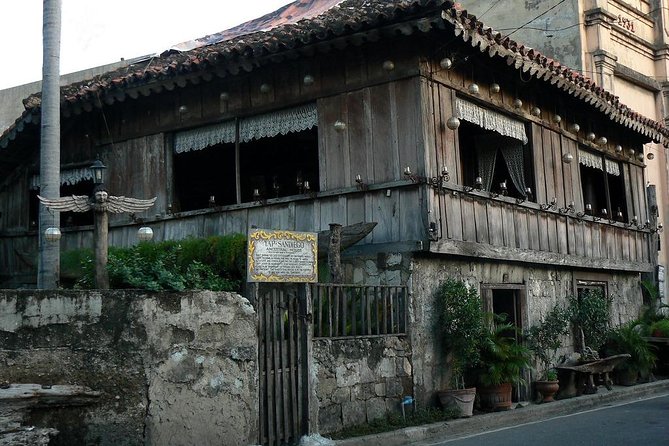
The tour then heads to Yap Sandiego Ancestral House, a historic residence built in the 17th century with hand-carved furniture, art, and a garden. The stop is about 20 minutes and is described as a place to see how a wealthy household lived, including carved details and curated spaces.
This is a great contrast to the earlier religious and military landmarks. Instead of power from the outside, you’re seeing local history from the perspective of a family home. If you like small-scale details—woodwork, artifacts, the idea of a lived-in past—this is one of the more satisfying stops on the route.
One practical note: because the time is short, focus on the main highlights first. You can always come back later if a particular room, carving, or garden corner really catches your eye.
The steel-and-bronze Cebu history monument: a quick but meaningful finale
The last stop is a concrete, steel, and bronze monument featuring sculptures showing scenes from Cebu’s history. The description doesn’t name it, but it’s clearly meant as a thematic wrap-up.
I like this kind of ending because it compresses multiple eras into one visual language. After seeing individual sites—cross, fort, basilica, temple, ancestral home—you get a final “big picture” stop that helps your brain organize what you saw.
Give yourself a few minutes to look at the scenes carefully, not just the overall shape. A guide’s narration here can make the sculptures click faster.
Comfort, crowds, and heat: make the most of four hours
Cebu can be hot, and this route is mostly in the city. One of the clearest on-the-ground considerations is shade: you should plan for sun and heat exposure. Bring sunscreen, a hat, and water if you’re allowed to purchase it during the tour (food and drinks aren’t included, so plan your own).
There’s also the reality of busy public spaces. You may notice people asking for money near attractions. Keep it simple: don’t get pulled into side conversations, keep your wallet secure, and stay focused on your guide and your next stop.
The good news is the stops are short enough that you’re not stuck in one place for ages. The tour is structured so you’re moving through highlights, and that pacing is exactly what makes a half-day work.
Price and value: why $75 can make sense here
At $75 per person for about four hours, the question is value-for-time, not just sticker price. Here, the math leans positive because you’re getting:
- Hotel pickup and drop-off
- Air-conditioned vehicle transport
- Professional guidance
- Private transportation (your group only)
- Admission tickets included at the main stops
Those included admissions matter more than they seem. You’re not only paying for the guide’s time; you’re also paying for access. If you tried to recreate this independently, you’d spend time on transport planning and likely end up paying entry fees anyway—plus you’d still want someone to explain what you’re looking at.
One more subtle value point: with a maximum of 8 people, you’re less likely to feel like you’re being rushed through a factory line. You can ask questions, and your guide can help you get photos without treating it like a chore.
Who should book this tour (and who should skip it)
This tour is a good fit if you want a quick, guided Cebu City orientation. It’s also great if you’re traveling with limited time and you want to hit recognizable landmarks without doing logistics.
You’ll likely enjoy it if:
- You’re a first-timer in Cebu City
- You want historical and cultural context, not just photos
- You prefer short visits and fast pacing
- You like having someone else handle routing
You might skip it if:
- You want slow museum-style exploration
- You dislike city walking in the heat
- You’re hoping to do lots of shopping as the main event (the route includes time where shopping is part of the experience, but it’s still a landmark-heavy tour)
Should you book the Half-Day Cebu City Tour?
If your main goal is to get oriented and understand what you’re seeing in a short window, I’d book it. The combination of hotel pickup, air-conditioned transport, included admissions, and guided storytelling makes the price feel practical rather than inflated.
I’d also book it if you’re the type who likes a “route with reasons.” The mix of Magellan’s Cross, Fort San Pedro, Santo Niño Basilica, the Taoist Temple, and Yap Sandiego Ancestral House helps you see Cebu as more than one chapter.
Just come prepared for sun and crowds, and you’ll get a lot out of four hours.
FAQ
How long is the half-day Cebu City tour?
It lasts about 4 hours.
What time does the tour start?
The start time is 9:00 am.
How much does it cost?
The price is $75.00 per person.
Is pickup and drop-off included?
Yes. The tour includes hotel pickup and drop-off in Cebu.
What’s included in the tour price?
You get a professional guide, air-conditioned vehicle, and transportation that’s listed as private transportation, along with admission tickets at the stops included in the route.
Are tickets or entry fees included for the stops?
Yes. Admission tickets are included for Magellan’s Cross, Fort San Pedro, Santo Nino Basilica, the Taoist Temple, and Yap Sandiego Ancestral House.
What isn’t included?
Food and drinks are not included, and souvenir photos may be available to purchase.
Is this a private tour?
Yes. It’s described as a private tour/activity, with only your group participating.
What’s the group size limit?
There’s a minimum of 2 people per booking and a maximum of 8 people per booking. Children must be accompanied by an adult.
What cancellation options do I have?
Free cancellation is available up to 24 hours in advance for a full refund.
Is it okay for most travelers to join?
The tour says most travelers can participate, and it’s near public transportation.